Showing posts with label decoration. Show all posts

Wednesday, 9 February 2022

World of Interiors 14: Charles Eastlake

Doom scrolling


Hints on Household Taste
, Charles L. Eastlake 

The idiot who praises, with enthusiastic tone,
All centuries but this, and every country but his own.

(W.S. Gilbert)

Books of “hints” on all aspects of life were popular when furniture designer Charles Eastlake published his suggestions for creating a tasteful home, but if you were expecting “how to clean an oriental rug with tealeaves”, you’ll be disappointed.  

Eastlake's clear, simple prose makes his diatribes against “sentimental young ladies” and their love of ribbon decoration even more stinging. Hardly anything is good enough for him. Some Bavarian door-knockers he illustrates are “somewhat too late to exhibit quite the right spirit of design”. 

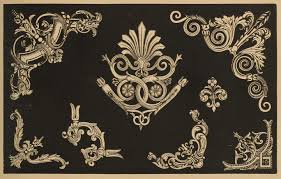
He bewails the baroque taste of the 1860s, derived from the era of French kings called Louis. Such tables, chairs, sideboards, beds: “There is not a straight line in their composition... this detestable system of ornamentation is called ‘shaping’.” He despises “scroll” ornament, suggesting that though it may be intended as foliage, it actually looks like a collection of the letter G (see picture). He dislikes imitations: “All articles of plate which represent in miniature objects of a different material – as barrels, tubs and baskets – are to be avoided.” Copies of oriental rugs won’t do because they are too perfect, but “I do not see exactly how veneering is to be rejected on ‘moral’ grounds.”

If people WILL prefer a bouquet of flowers or a group of spaniels worked upon their hearthrug to the conventional patterns which are adopted by the Indian and Turkish weavers, it is difficult to convince them of their error... The quasi-fidelity with which the forms of a rose or a bunch of ribbons, or a ruined castle, can be reproduced on carpets, crockery and wall-papers will always possess a certain kind of charm for the uneducated eye.

Modern wallpapers are “wretched specimens... gaudy and extravagant trash”. He recommends taupe, pale green, silver-grey and cream.  

It is a great pity that ladies who devote much of their time to the execution of the wretched [edging] patterns sold at ‘fancy-work shops’ do not exercise a little more discrimination in their choice... The so-called ‘ornamental’ leatherwork which a few years ago was so in vogue with young ladies... is utterly opposed to sound principles of taste.

He condemns light furniture (easy to rearrange as desired) as flimsy and feminine, and recommends high-backed settles to keep off draughts. “The drawing-room may be crowded with silly knick-knacks,” but libraries are to be a mancave. However, instead of a Grecian funerary urn, adorn the top of your bookcase with a miniature copy of a good Greek sculpture – the Gladiator, the Discobolos, Antinous.

When I look into the windows of some establishments devoted to decorative art, and see the monstrosities which are daily offered to the public in the name of taste – the fat gilt cupids, the coarse and clumsy mouldings, the heavy plaster cornices, and the lifeless types of leaves and flowers which pass for ornament in the nineteenth century – I cannot help thinking how much we might learn from those nations whose art it has long been our custom to despise – from the half-civilised craftsmen of Japan, and the rude barbarians of Feejee. (He got his wish – in the later 19th century there was a craze for all things Japanese.)

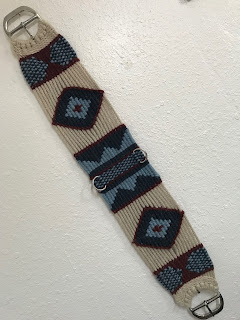
So, Eastlake, where are the positives? He shamelessly promotes his own furniture – blocky and heavy, lots of oak and strap hinges – and recommends an approach still followed by England’s upper-middle classes. Why not use an “honest” wooden bucket as a coal scuttle, instead of a cast-iron monstrosity with a view of Edinburgh Castle let into the lid? For knick-knacks, look either to the past (the Renaissance) or to current designers who copy good earlier models: Minton and de Morgan. He praises a type of curtain fabric whose stripes recycled actual horse-girths.


His ideas live on among the Upwards, who go for anything rustic (made by peasants from far, far away), or functional (French enamel coffee pots), or genuinely old (the kitsch of Eastlake’s day is now antique). What would Eastlake think of today’s “country” interior with artificially distressed (new) wood everywhere?

His ideas were taken up by the less cultured, and by the 1920s the Tudorbethan style was all over the suburbs, complete with heavy sideboards, Welsh dressers and appliquéd oak beams. The fashion was guyed at the Festival of Britain as “Gremlin Grange”, a warped cottage with twisted timbers and diamond-paned windows. What NOT to build, explained the designers, who were rehousing blitz victims in gleaming modernist estates and towers.

More here, and links to the rest.


Thursday, 31 October 2013

Decor Crimes


“Total modernising, but trying to keep the character of the property back to the cottage style.” “60s is Victorian, isn’t it?” “All the doors have been dipped when they moved in 10 years ago.” “This is our Victorian-inspired room”.  “Artex – it’s a bit old-school.” “Corridor rooms.” “The Wow Factor - finished to a very high standard.”
(All from makeover shows and property programmes)

“The copying on show in Milan proves that not only do most designers not read history books, they also don't read magazines they are not in.” (Kieran Long)

“Cheltenham: Staying in the most incredibly middlebrow hotel. I've seen no colour but taupe in days. This is Britain's default genius loci.” (@tomdyckhoff)

“Glade plug-ins, square plates.”
(@itsbadtaste)

In American sitcoms, a vivid crocheted Afghan over the back of the sofa is a sign we’re in a blue-collar home.

More here.

And some from lovemoney.com:

Worst interior design fads: Artex walls, avocado bathroom, woodchip walls, removal of original features, fake laminate wood flooring, exposed brickwork on interior walls, brightly coloured Formica kitchens, lino, spiral staircases, wood panelling

Worst furniture fads: built-in bar, mock fireplaces, animal print rugs, net curtains, MDF built-in cupboards, black ash furniture, futons, reproduction "antique" furniture, teak sideboards, multi-functional furniture

(Don’t they know that teak sideboards and lino are really hip?)

If you have a terrace house, please don’t install:
granite worktops
marble bathrooms
downlighters
ranch-style stone chimney
rustic white-painted door with black iron knocker, horseshoe, nail heads, letter slot
stone cladding, especially multi-coloured

(Of course, it’s your terrace house – do what you like.)

Looks to avoid:
3D plates hung on the wall
60s psychedelia (Instead of opening the doors of perception and ushering in the Age of Aquarius, it immediately became just another décor style or dress fabric.)

an island, with a tiny overhang, and bar stools for eating in the kitchen (So you can’t relax and there’s nowhere to put your knees.)

boutique hotel style
bright overhead lights
bunting made out of remnants
carpet in the bathroom (Especially pink. Especially when it goes up the side of the bath.)
carpets in pubs
chandeliers
converted mill with the machinery in the living room
copying your parents’ décor (your clothes and lifestyle won’t match)
corner bath
cosies for dining chairs
cottagey feel: same old bland interior, with one “rustic” detail
country house hotel style (gilt mirrors, lots of chintz)
country kitchen: science lab with rustic doors

diagonal wood cladding or wall tiles (80s)
divan beds (except they’re comfortable and can double as sofas)
Dralon (velvet-look material for sofas)
exposed stone wall – in your bathroom
exposed stone wall in an old cottage – especially not lacquered (The original inhabitants would have plastered and painted.)
extensions that create a long, narrow room and make the original rooms too dark

faux granite worktops
feature wall with very dark wallpaper
fitted carpet in churches
front and back rooms knocked through to make one long, thin room
furniture blocking a window

Georgian door with fanlight on a 60s council flat or 30s semi (architects call them “embellishments”)
gold Roman blinds

gravel everywhere: on your sitting out area, on a “membrane” with weeds poking through, as parking for 20 cars in front of your McMansion (It’s all over Prince Charles’s faux-old village of Poundbury, I hear.)

huge three-piece suite crammed into a small room
leather sofas or suites
matching curtains and wallpaper

modernist interiors in a Victorian/Edwardian/30s shell. Gutting a 30s house with small rooms, turning it all into one “space”, and filling it with lime-green sub-Eames furniture.

nested tables

new houses based on converted old houses (They’re being built with a long thin “open plan living kitchen dining area” with a window front and back modelled on two knocked-through rooms.)
ochre-toned art (if you want to sell a picture, use lots of red)

painting a decent Edwardian pub exterior in orange/cobalt, orange/jade or lilac/violet (Mid-noughties - they’ve all been repainted brown, black or grey. I wonder why.)

pebbledash
prominently placed family portraits
ragrolling, dados and stencils (80s)
removing all internal walls from a tiny cottage
removing all original features later than 1900
removing half-timbering from a 30s semi
reproduction antique furniture, patterned carpets and Chinese rugs in a modernist flat (pensioner style)
room with a nautical theme

shells in the bathroom (80s whimsical)
sofas and chairs jammed against the wall, miles apart
space wasted on hallways and corridors, especially in a studio
stripped-back inglenook containing a small wood-burning stove
tartan wallpaper/carpets/furniture
turning part of a room into a “kitchen area” instead of making the whole room into a kitchen you can live in
TVs in cupboards or covered with a cloth

varnishing floors, furniture and all exposed wood in pale orange
Victorian conservatory on modernist house
Victorian grate, Regency mantelpiece

Victorian lamp standards in 60s shopping malls
walls covered with clocks and decorative plates
whimsical bronze figurative garden statues (and sculptures of lions made out of chicken wire)

More decor here, and links to the rest.